
Transparency Builds Trust: Addressing Community Concerns About ICE Activity in Sandy Springs
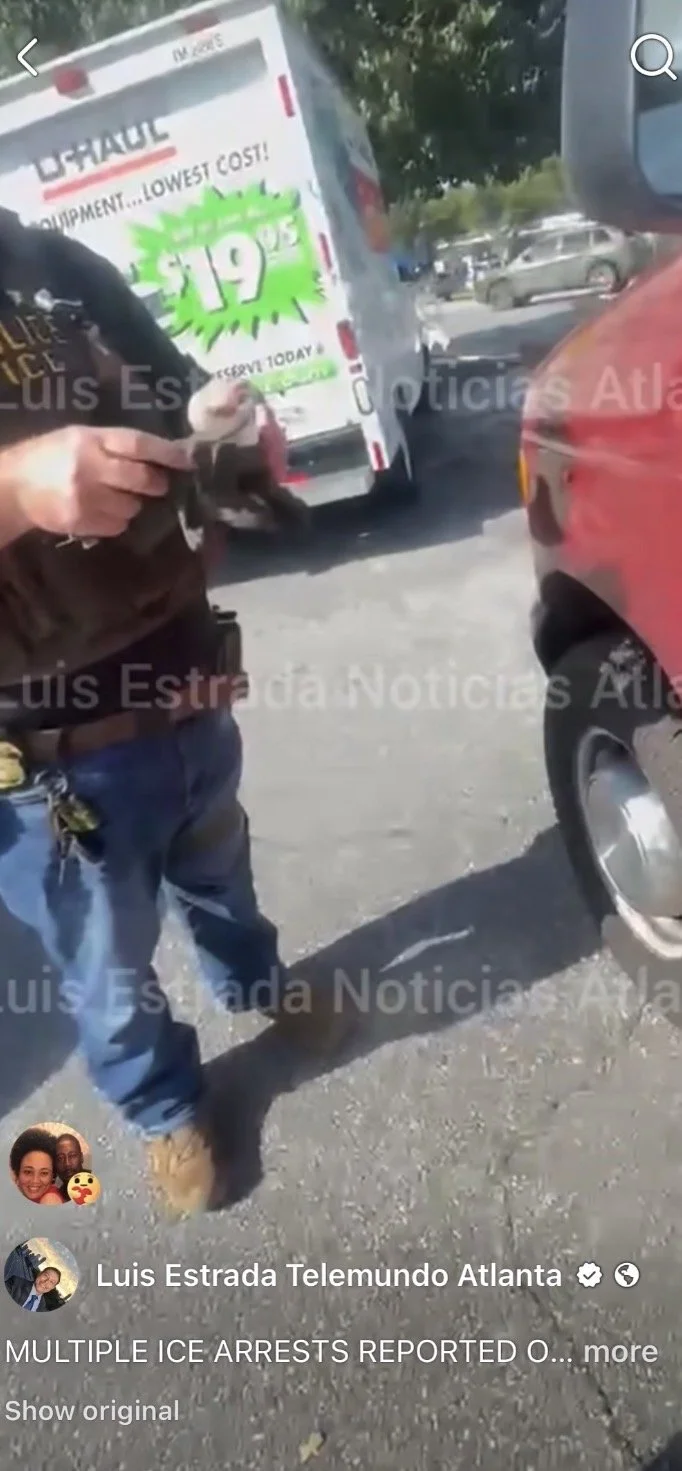
ICE agents conduct an immigration enforcement operation in Sandy Springs on July 16, 2026. The activity prompted community concerns and calls for greater transparency regarding coordination, public safety, and communication with residents.
One of the most important responsibilities of public service is listening when people are concerned.
On Tuesday, July 21, 2026, I addressed the Sandy Springs City Council during public comment to speak about growing concerns surrounding recent immigration enforcement activity in and around our community. My message was simple: transparency and public safety go hand in hand.
Click here to watch his statements.
As families prepare for a new school year, many residents have shared concerns about what they are seeing and hearing. Parents are asking whether it is safe to take their children to school. Workers are asking what their rights are during traffic stops. Community members deserve clear information—not rumors or fear.
My request to the City was not about assigning blame or advancing a political agenda. It was about ensuring residents understand the policies and procedures that govern interactions between local law enforcement and federal immigration authorities.
When people have accurate information, fear gives way to confidence. Transparency helps residents make informed decisions, strengthens trust in government, and supports the work of our public safety professionals.
I believe we can protect public safety while also protecting the constitutional rights of every person in our community. Those goals are not in conflict—they reinforce one another.
Leadership means addressing difficult questions, even when the answers require thoughtful conversation. I remain committed to advocating for openness, accountability, and policies that keep every Sandy Springs resident informed, safe, and respected.
Our community is strongest when government communicates clearly, listens carefully, and earns the public's trust through transparency.
More Than 1,000 Residents Gather for Sandy Springs’ No Kings Rally
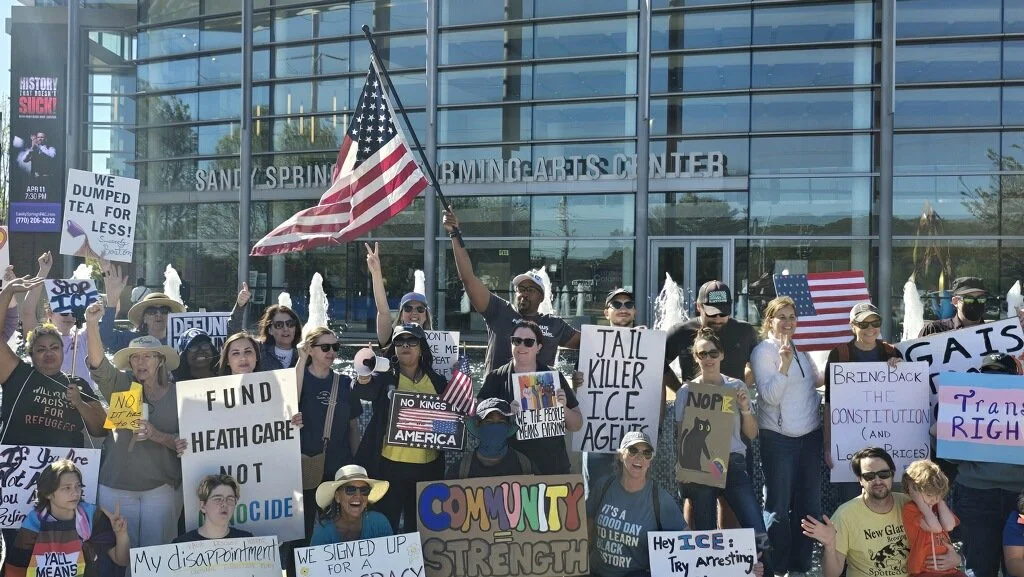
More than 1,000 residents gathered at City Green for the Sandy Springs No Kings Rally, demonstrating the power of civic engagement, community involvement, and democratic participation.
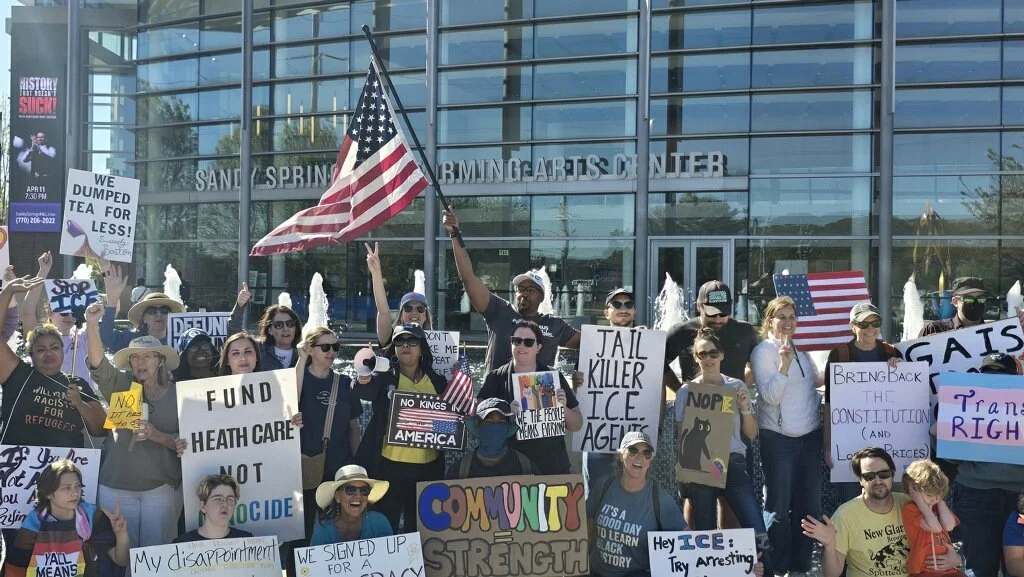
More than 1,000 residents gathered at City Green in Sandy Springs for the No Kings Rally, demonstrating the strength of community engagement and democratic participation.
On March 28, more than 1,000 residents gathered at City Green in Sandy Springs for the No Kings Rally, demonstrating the power of civic engagement and community action.
The event brought together neighbors from every corner of our city who believe that democracy works best when people participate. Families, students, retirees, faith leaders, and community advocates stood side by side to make their voices heard and reaffirm the values of representative government.
I was humbled to see 1,032 friends and neighbors show up in support of the principles that unite us: accountability, participation, and the belief that every voice matters.
The rally was not about any one person. It was about the people.
Throughout our nation's history, progress has always depended on ordinary citizens choosing to become involved in the decisions that shape their communities. The No Kings Rally served as a reminder that democracy is strongest when people move from spectators to participants.
One of the most encouraging aspects of the day was the diversity of those in attendance. People from different backgrounds, experiences, and perspectives came together around a common belief that engaged citizens help create stronger communities.
As Sandy Springs continues to grow and evolve, moments like these demonstrate that residents care deeply about the future of our city, our state, and our country.
To everyone who attended, volunteered, organized, spoke, or simply showed up: thank you.
Democracy is not a spectator sport.
And on this day, Sandy Springs showed up.
Juneteenth and Sandy Springs: Why Savannah's Story Matters Here
What does Savannah's role in the story of Juneteenth have to do with Sandy Springs? More than many realize. As historic landmarks like the Woodall Farmhouse disappear, preserving the stories of the people who lived, worked, and built this community becomes even more important.
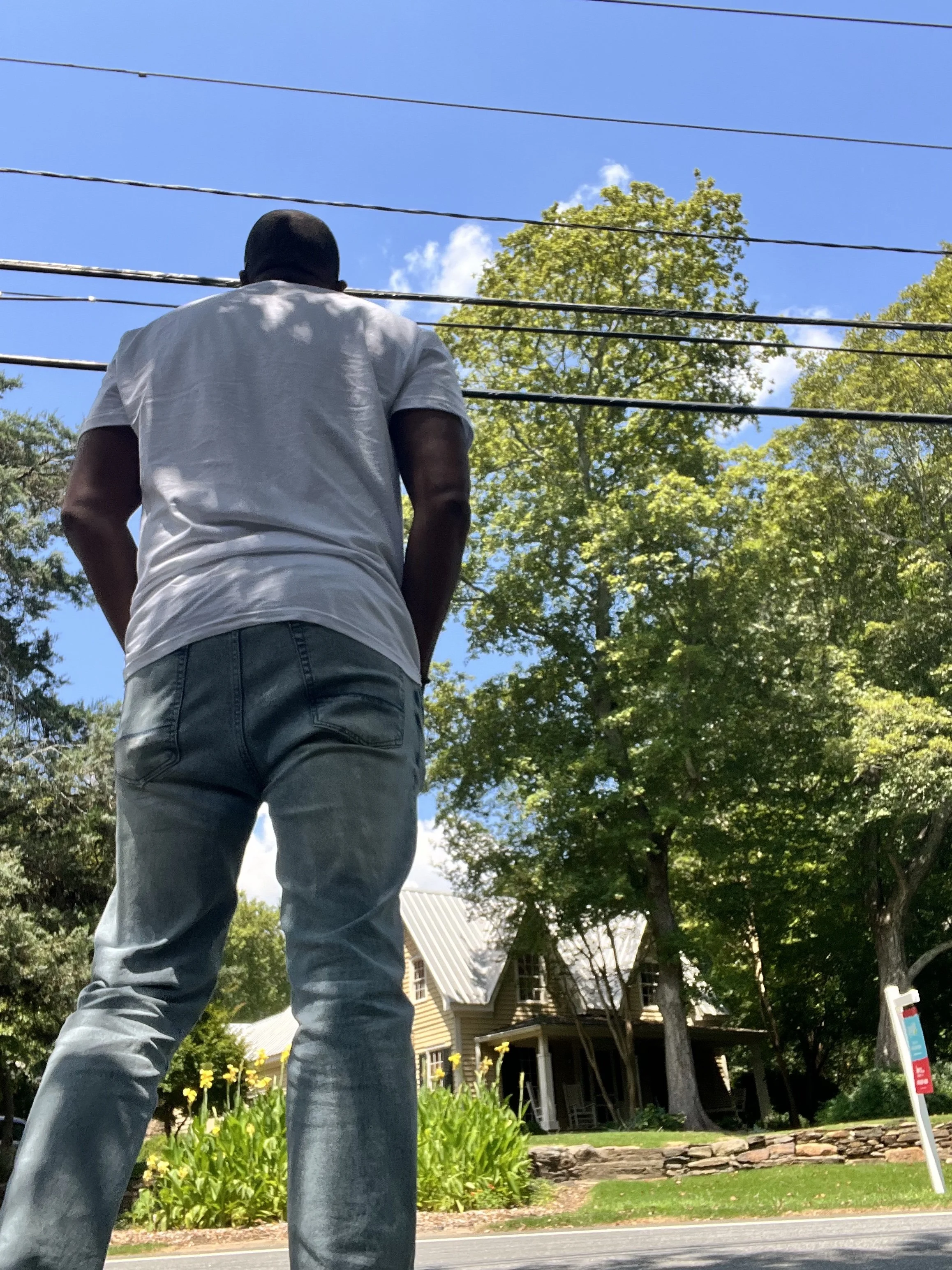
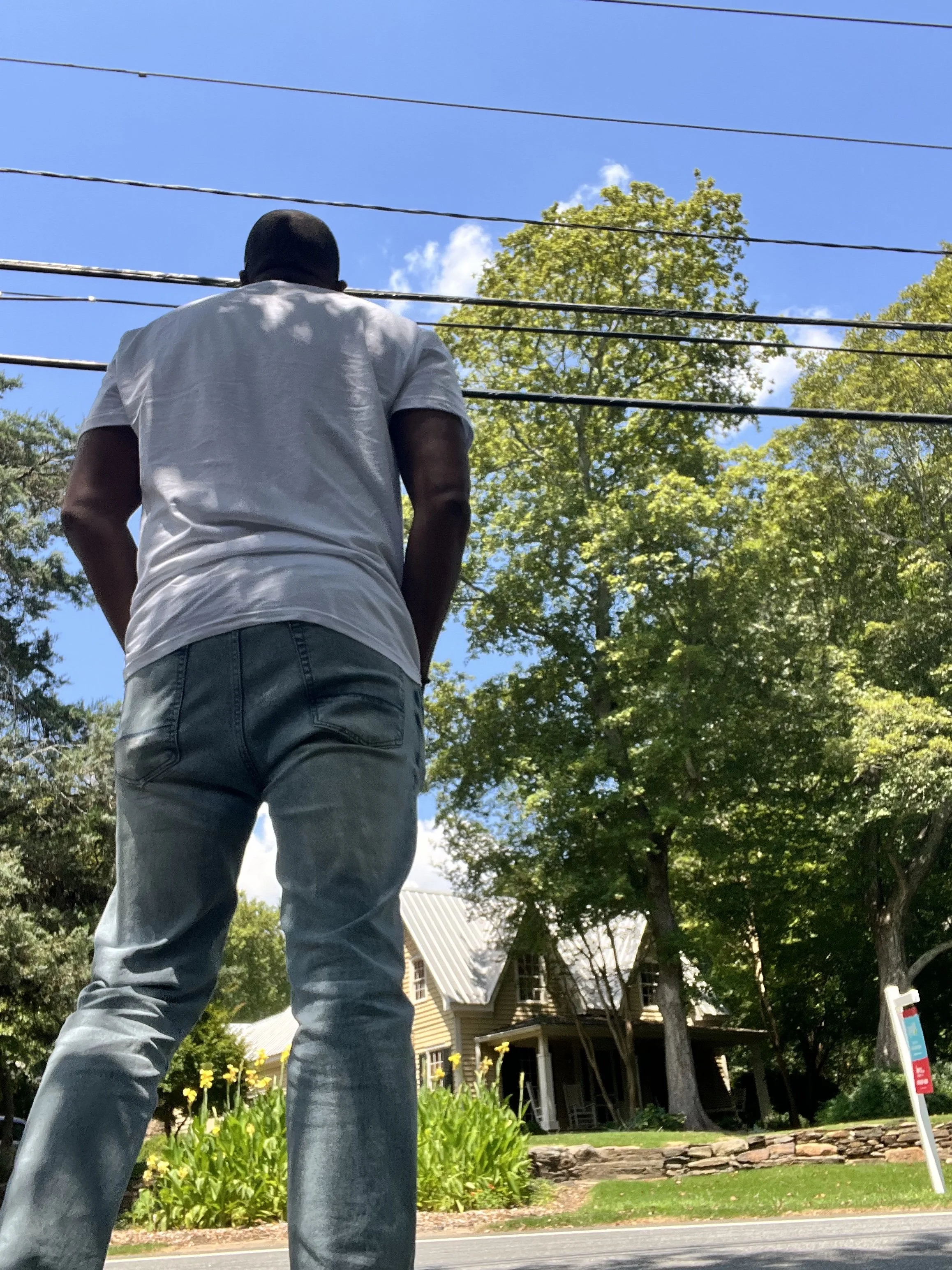
Dontaye Carter stands in front of the historic Woodall Farmhouse in Sandy Springs before its demolition, preserving a visual connection to the community's past.
When most people think about Juneteenth, they think about June 19, 1865, when Union troops arrived in Galveston, Texas, and announced that enslaved people were free.
But the road to freedom did not begin in Texas.
Dontaye Carter dives into the history of the Woodall House in Sandy Springs.
Five months earlier, in January 1865, General William T. Sherman met with twenty Black ministers in Savannah, then Georgia's former capital, to discuss what freedom would mean after slavery. The result was Special Field Orders No. 15, the order that became known as "40 acres and a mule."
It was one of the nation's first attempts to answer a question that still echoes today: What does freedom look like after generations of bondage?
The answer mattered in Savannah.
It also mattered here.
Long before Sandy Springs became a city, the land that now makes up our community was worked by enslaved men, women, and children. The farms, roads, churches, and families that shaped this area were all touched by the institution of slavery.
The same year Sherman met with Black ministers in Savannah, families across Georgia—including those living on the land that would become Sandy Springs—were experiencing emancipation, uncertainty, and the challenge of building a future in freedom.
Juneteenth reminds us that freedom was never a single moment. It was a journey.
That journey ran through Savannah.
It ran through Texas.
And it ran through North Fulton, where generations of Black families helped build communities despite enormous obstacles.
Today, we may not see the plantations, farms, or homes that once stood here. Many of the physical reminders are gone.
But the history remains.
Understanding that history is not about dwelling on the past. It is about honoring the people who endured it, recognizing the contributions they made, and ensuring that future generations know the full story of the community they call home.
Because a city that knows its history is better equipped to build its future.
Happy Juneteenth.
Watch more on the the journey to bring Juneteenth to Sandy Springs.
The first annual Juneteenth celebration in Sandy Springs brought neighbors, families, faith leaders, and community members together to honor freedom, reflect on our shared history, and celebrate the contributions of Black Americans.
Juneteenth commemorates June 19, 1865, when enslaved people in Texas finally learned they were free—more than two years after the Emancipation Proclamation. As our community gathered for this historic event, we recognized that freedom is not just a moment in history, but an ongoing commitment to learning, unity, and progress.
Thank you to everyone who helped make this celebration possible and to those who joined us in commemorating this important day.
#Juneteenth #SandySprings #JuneteenthSandySprings #Community #BlackHistory #FreedomDay #GeorgiaHistory
The Juneteenth Federation Mission Statement: Our Mission is to optimize synergies among the economic, cultural, and community resources of people of color, to absolve and highlight disparities that offend our birthright as legal citizens of the United States of America, and to facilitate tangible safe havens for economically disadvantaged children of color otherwise ostracized. History of Juneteenth: Juneteenth marks the end of the civil war and the end of chattel slavery in the United States of America. It is also known as Emancipation Day or Juneteenth Independence Day. The name "Juneteenth" references the date of the holiday, combining the words "June" and "nineteenth." On June 19, 1865, Major General Gordon Granger issued General Order No. 3, which informed the people of Texas that all enslaved people were free. The order was written two and a half years after President Abraham Lincoln’s historic Emancipation Proclamation. This order also informed the Country of the end of the U.S. Civil War. Nearly 200 years later, on June 19, 2021, five members of the Sandy Springs community joined to create the first Juneteenth celebration in Sandy Springs at City Springs. In less than ten days, Corey Waller, Megan Harris, Le’Dor Milteer, Councilwoman Dr. Melody Kelley, and Dontaye Carter attracted more than 700 people to the inaugural Juneteenth Celebration in Sandy Springs, which included historical and biblical lessons from local pastors, words of truth and inspiration from the Georgia NAACP President, acknowledgments of Black leaders in Sandy Springs, music, dancing, bouncy houses, booths for Black-owned business owners, and food trucks. After creating the inaugural Juneteenth Celebration, Mr. Carter, Ms. Milteer, Mr. Waller, and Ms. Harris formed the Juneteenth Federation to continue the commemoration of Juneteenth in Sandy Springs. The Georgia NAACP became the first fiscal sponsor of the Juneteenth Federation by agreeing to support the celebration for the next ten years. #SandySprings #Juneteenth #Juneteenth2023
The Juneteenth Federation hosted its community event in Sandy Springs this year at Sandy Springs Middle School. #Juneteenth #sandyspringsga #SandySprings #JuneteenthCelebration #TheJuneteenthFederation
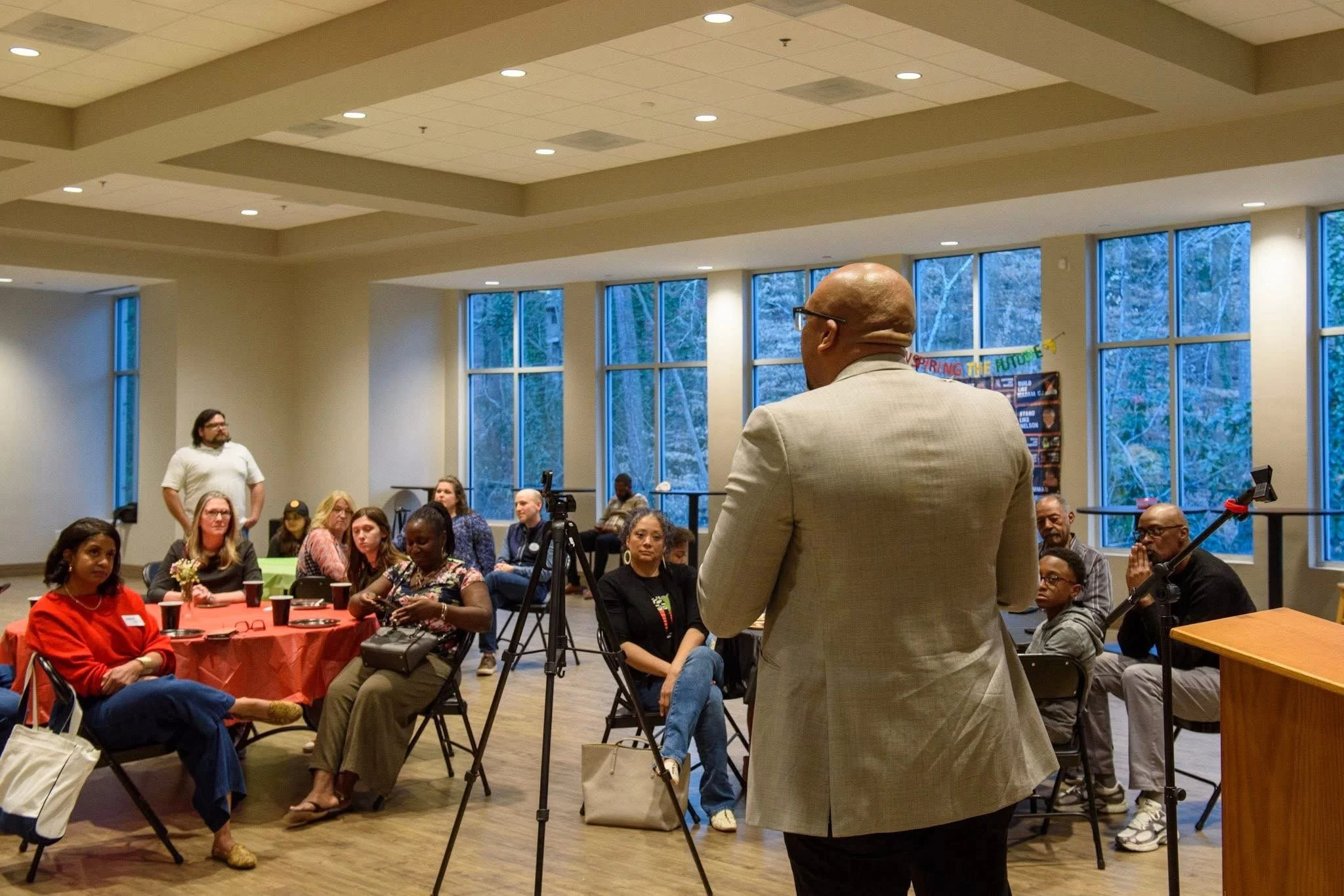
Closing Out Black History Month Strong in Sandy Springs
Residents from across Sandy Springs gathered at Rivercliff Lutheran Church to close out Black History Month with an evening of reflection, community, and conversation about the lessons of the past and the opportunities ahead.
Some events take months to organize. Others come together in a matter of days.
This was one of those moments.
When the call went out to gather, learn, and reflect, the community responded. Residents from across Sandy Springs came together at Rivercliff Lutheran Church to close out Black History Month with an evening focused on history, truth, and connection.
I’m grateful to everyone who attended, participated, and helped make the event possible. I’m especially thankful to the leadership of Rivercliff Lutheran Church for opening their doors and partnering with us to create a space where meaningful conversations could take place.
Black History Month is about more than looking back. It is an opportunity to understand the sacrifices, struggles, and achievements that helped shape our community and our country. It is also a reminder that each generation has a responsibility to continue moving forward.
As I shared during the event, the best way to honor our ancestors is to build a future worthy of their sacrifice.
Thank you to everyone who helped us close out Black History Month strong in Sandy Springs.
Photo Credit: TraShawn Wade
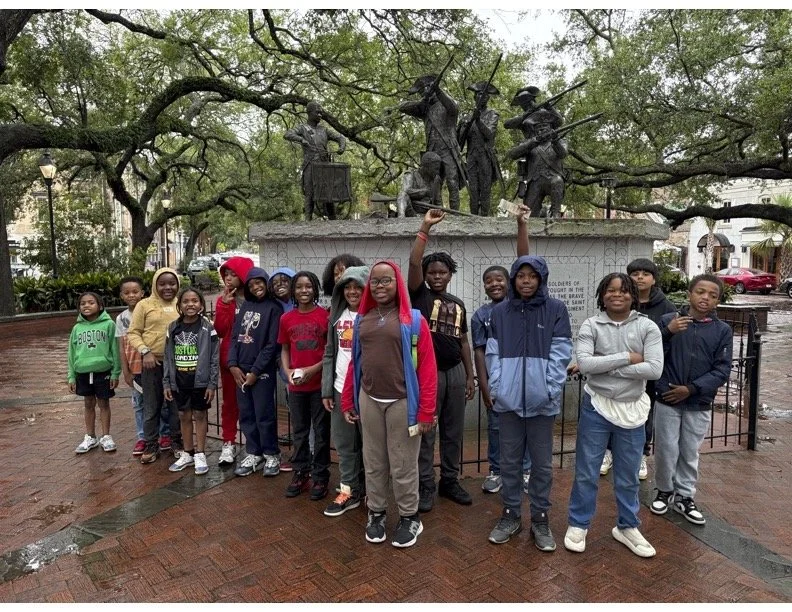
Learning History by Walking Through It: Boys Club Visits Savannah
What began with lessons on tying ties, shaking hands, and career exploration led to a powerful day of learning in Savannah, where students experienced Georgia history firsthand and gained a deeper understanding of their place in the story of our state.
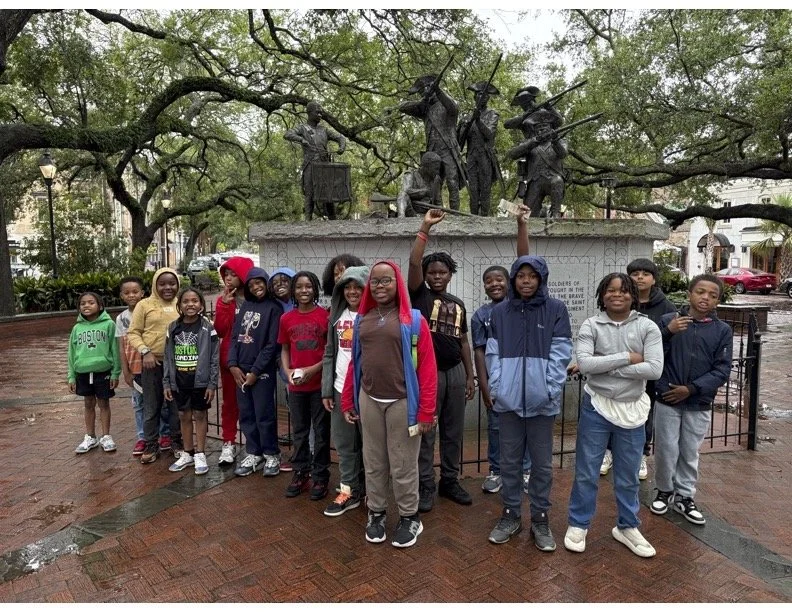
Dunwoody Springs 4th and 5th Graders Take Historical Trip to Savannah
At Dunwoody Springs Elementary, we believe leadership starts long before adulthood.
Throughout the year, our Boys Club has focused on the fundamentals—teaching young men how to tie a tie, make eye contact, shake hands with confidence, and learn from professionals about different career paths. These lessons are about more than manners. They are about building character, confidence, and a vision for the future.
On Saturday, we took that learning beyond the classroom.
A group of our young boys traveled to Savannah, one of Georgia’s most historic cities, to experience history firsthand. We visited sites that helped shape our state and our nation, giving our students the opportunity to connect what they learn in books to the places where history actually happened.
There is something powerful about standing where history was made. It transforms lessons into experiences and encourages young people to see themselves as part of a much larger story.
Our goal has always been to expose our students to new opportunities, broaden their perspectives, and help them understand that their future is not limited by their zip code or circumstances. Whether learning professional skills, exploring career opportunities, or walking through historic landmarks, every experience is designed to help them grow into the next generation of leaders.
I am grateful to the volunteers, educators, parents, and community partners who continue to invest in these young men. When we pour into our children, we strengthen our entire community.
The future of Sandy Springs is bright because of the young people we are helping prepare today.
Featured in Rough Draft: Advancing the Conversation in Sandy Springs
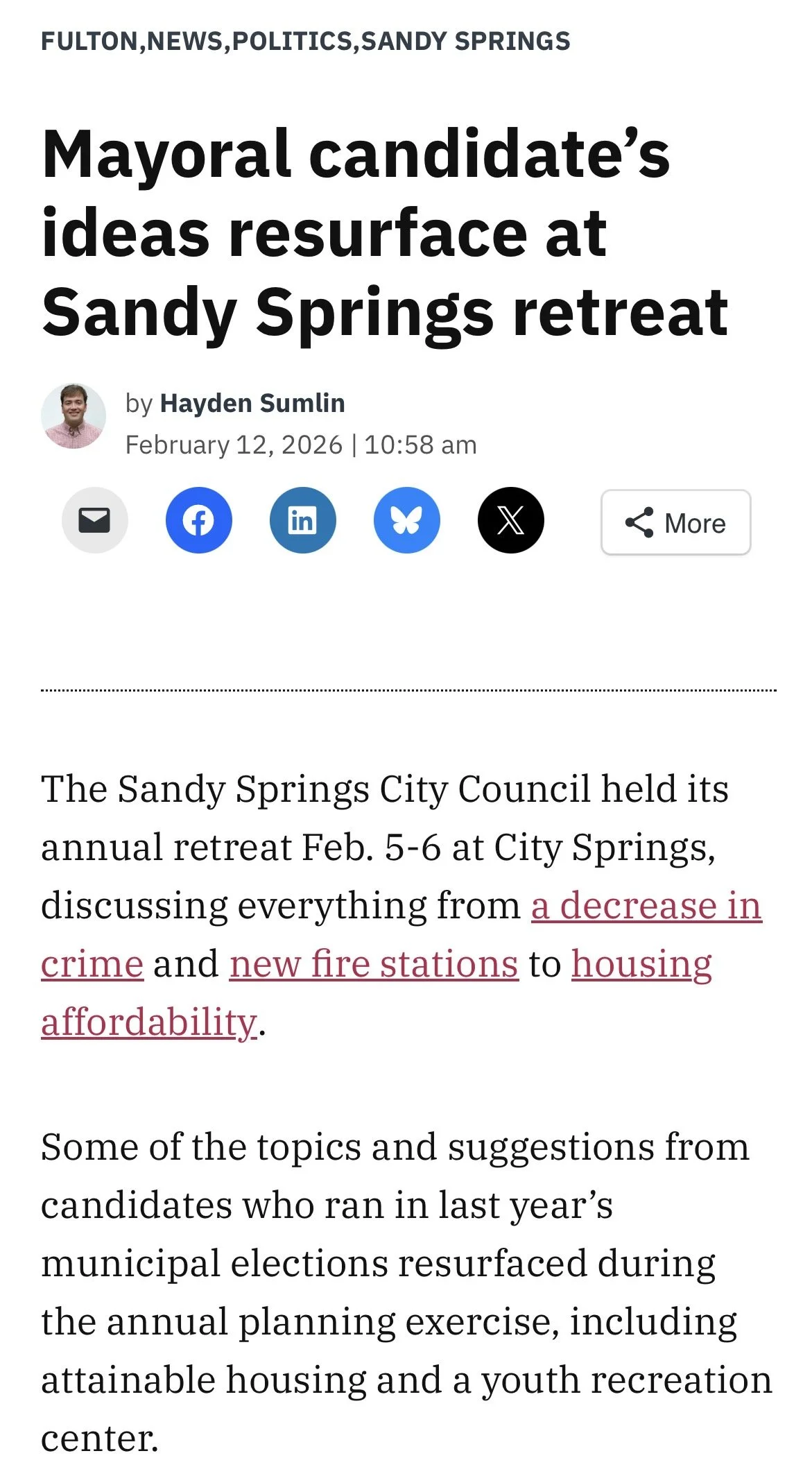
Dontaye Carter’s mayoral campaign priorities on housing affordability and family-centered infrastructure were featured in Rough Draft Atlanta coverage of the Sandy Springs City Council Retreat. Learn how his ideas continue shaping city policy.
Featured in Rough Draft Atlanta
Ideas That Continue to Shape Sandy Springs
In February 2026, Rough Draft Atlanta highlighted how key issues from my mayoral campaign — recreation access, family-centered infrastructure, and housing affordability — are now central to city leadership discussions at the Sandy Springs City Council Retreat.
While I did not attend the retreat, I shared my perspective with the publication.
“I’m encouraged to see the city advancing a conversation that’s been decades in the making. Over the last two election cycles, I’ve urged the city to be more intentional about investing in recreation and family-centered infrastructure.”
For years, I’ve advocated for smart investment in parks, accessible public spaces, and long-term infrastructure that serves families in every zip code — not just those closest to City Hall.
As discussions move forward around Hammond Park and other recreation planning, I emphasized what must remain front and center:
“Hammond Park makes sense given its proximity to City Hall, but as we move forward, the city still has to grapple with geography, traffic, and access — especially for families on the north and south ends of Sandy Springs.”
Housing: Leadership Requires Hard Conversations
Housing affordability — one of the defining issues of the 2025 mayoral race — was also addressed during the retreat.
Following the December runoff, I had a productive and candid meeting with Mayor Rusty Paul where housing policy was a central topic.
“We spoke at length about housing and the importance of follow-through on ideas raised during the campaign, including the concept of a focused task force. We discussed the need for leadership that can responsibly manage expectations on both sides — developers who want to do business with the city and the hardworking, tax-paying residents who want to remain in the communities they call home.”
The city’s housing assessment confirmed what many families already feel:
Sandy Springs lacks entry-level homeownership opportunities
Housing stock for residents earning under $50,000 continues to decline
Redevelopment is often replacing existing homes rather than expanding attainable ownership
There is no “magic wand” solution. Real leadership means navigating political realities while protecting long-term community stability.
These are complex policy choices — but avoiding them is not an option.
Influence Beyond the Ballot
The 2025 election may be over.
The work is not.
The ideas we elevated — equitable access, thoughtful growth, responsible housing policy, and family-first planning — are now shaping the city’s direction.
Leadership is not measured solely by election results.
It’s measured by whether your ideas move the city forward.
And they are.
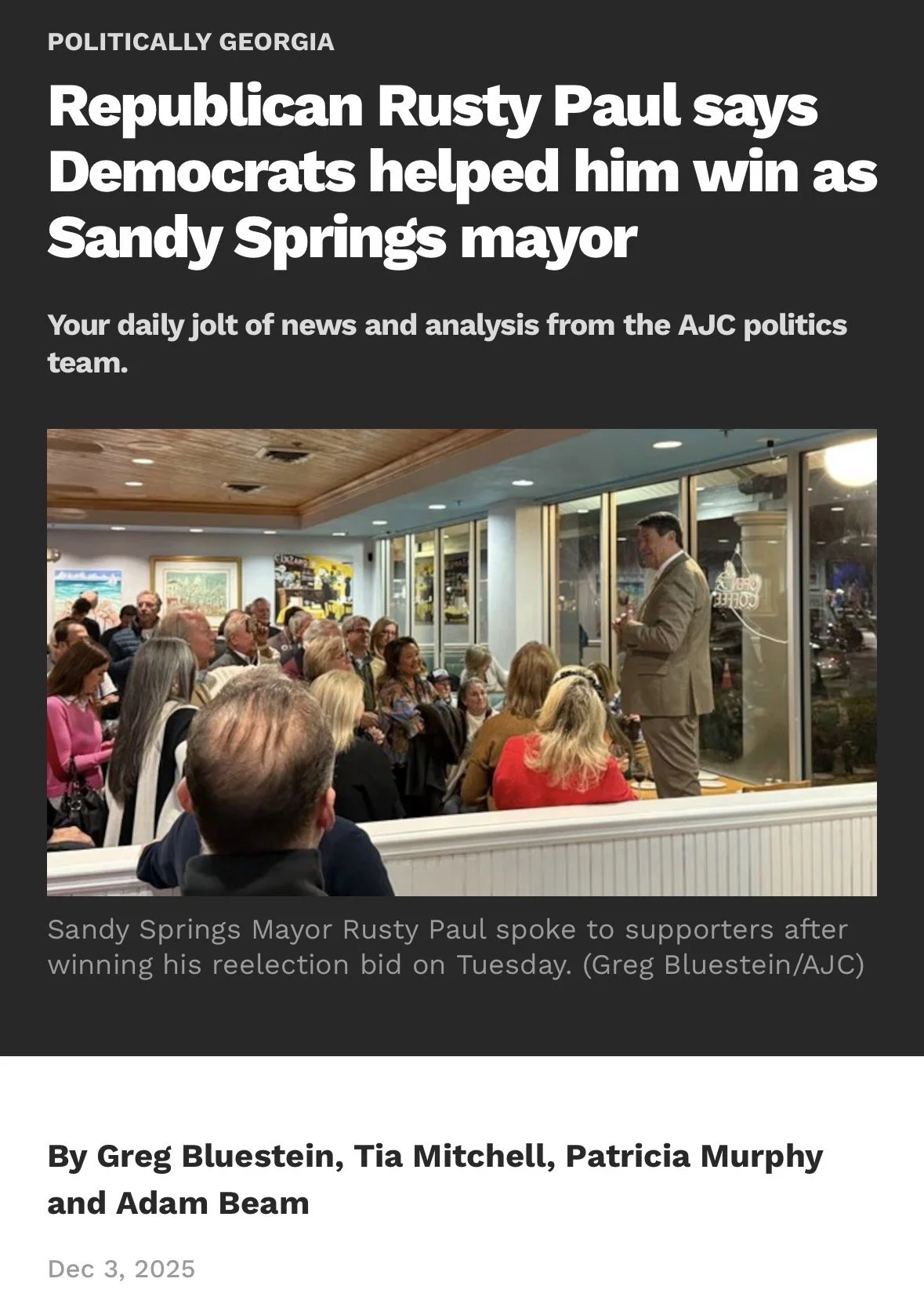
What the AJC Got Wrong About the 2025 Sandy Springs Runoff
The 2025 Sandy Springs mayoral runoff was not a rejection of progressive ideas. It was shaped by a compressed SB 202 runoff timeline, limited early voting before Thanksgiving, decades of incumbency advantage, low voter turnout, and media narratives that failed to fully interrogate facts, timelines, and context.
Progress is always validation.
I believe deeply in the role of journalism in a democracy. A free press matters. Accountability matters. Precision matters.
That’s why it’s important to address what Greg Bluestein and The Atlanta Journal-Constitution got wrong in their coverage of the 2025 Sandy Springs mayoral runoff — not out of grievance, but out of respect for the public record and for voters who deserve an accurate telling of what actually happened.
Numbers Matter. Context Matters.
During runoff coverage, the AJC published a quote from Georgia GOP Chair Josh McKoon stating that Mayor Rusty Paul won “over 70% of the vote.” He did not. The final tally was 68%.
You can absolutely report a quote. But when a factual inaccuracy is left unchallenged, it becomes part of a misleading narrative. Journalism is not stenography. Numbers matter. Precision matters. Context matters. Before I ran the first time in 2021, Republican’s won over 80-percent of the vote. That hasn’t happened in the last two election cycles.
When Timelines Are Ignored, Harm Follows
This was not an isolated issue.
Earlier reporting allowed Rep. Esther Panitch to frame her endorsement of Mayor Paul as a response to Gabriel Sanchez’s endorsement of my campaign — even though the timeline clearly shows her endorsement came first.
That wasn’t spin. It was factually incorrect.
Because it went unchallenged, that misrepresentation became the foundation for falsely painting me as antisemitic — a charge that Mayor Paul’s campaign later weaponized and that ultimately led to death threats directed at me and members of my team.
Unchecked timelines don’t just distort narratives. They can cause real harm.
This Was Not an Ideological Rejection
Throughout the race, half-truths, selectively framed anecdotes, and unchallenged quotes shaped the broader story more than verifiable data.
The result was a misleading impression: that this election represented a partisan repudiation of progressive ideas.
The data tells a different story.
The central dynamic of this runoff was generational, not ideological.
Democrats who supported Mayor Paul were overwhelmingly over the age of 60. Younger and middle-aged Democrats broadly supported my campaign. That matters — especially in a city undergoing rapid demographic and generational change.
Incumbency Is Not Momentum
Accuracy also requires honesty about Mayor Paul’s standing.
He is a fourth-term incumbent who has held elected office in Georgia since 1977.
A wide margin under those circumstances does not represent fresh political momentum. It reflects:
decades of incumbency
deep name recognition
institutional familiarity
comfort with the status quo
It is also impossible to separate those totals from the racist mailer that circulated during the runoff and the false insinuations that I was antisemitic — both of which undeniably influenced voter sentiment.
Voters Chose Change Before the Runoff
Sandy Springs is changing — and voters demonstrated that clearly.
Before the runoff, voters had two other establishment-aligned candidates to choose from. They did not select them. Instead, they advanced a different kind of candidate.
That alone disproves the idea that the electorate was simply seeking “more of the same.” Among Democrats, independents, and families, there was a clear appetite for something different.
Turnout Was Structurally Suppressed
Context matters most when assessing turnout.
Early voting for the runoff lasted only four days and occurred immediately before Thanksgiving — a timing that disproportionately suppresses participation among younger voters, working families, renters, and multicultural communities.
Before SB 202, Georgia’s runoff system looked very different:
Runoffs occurred nine weeks after the general election
Early voting lasted two to three weeks
Campaigns had time to engage younger, working-class, and diverse voters
SB 202 compressed everything:
a four-week runoff period
minimum early voting days
a pre-holiday voting window
The structural advantage shifted decisively toward older, habitual voters while dampening participation from emerging coalitions.
Low Turnout Is Not a Mandate
Fewer than 15,000 of the 66,000 registered voters in Sandy Springs participated in this runoff.
That is not a citywide referendum on ideology.
It is the predictable outcome of:
a compressed timeline
limited early voting
a pre-holiday election window
decades of incumbency advantage
With less than a quarter of registered voters participating, no one should treat this result as a sweeping endorsement of one agenda or a rejection of another.
Labels Without Balance Are Not Journalism
Finally, narrative fairness matters.
Repeatedly amplifying Georgia GOP dog whistles labeling me as “radical” — without factual balance or scrutiny — is reckless.
My campaign platform focused on:
housing affordability
community safety
small business growth
ethics and transparency
youth opportunity
None of that is radical. Nothing in my record as a journalist, public servant, or community leader reflects extremism.
Printing a label simply because it appears inside a quote does not place it above fact-checking.
Journalism requires more than repeating rhetoric. It requires testing rhetoric against reality.
The Story Deserved More Rigor
Telling this story as a sweeping ideological rejection — instead of what it actually was — a compressed holiday runoff shaped by incumbency, generational divides, low turnout, racially charged messaging, and partisan framing — is incomplete and misleading.
I am not asking for favorable coverage.
I am asking for accurate journalism that:
challenges quotes
checks timelines
clarifies numbers
interrogates labels
distinguishes fact from political spin
That is the job.
Sandy Springs is changing — demographically, generationally, and politically. A more honest and nuanced accounting of the 2025 Sandy Springs mayoral runoff election would reflect that reality.
Why This Matters for Sandy Springs Voters
This election analysis is not just about media accountability. It is about how local journalism, Georgia runoff election laws, and voter access shape outcomes in fast-changing cities like Sandy Springs. As debates continue around SB 202, municipal elections in Georgia, and low-turnout runoff races, accuracy and context are essential for voters trying to understand what actually happened — and what comes next for Sandy Springs.
Frequently Asked Questions About the 2025 Sandy Springs Runoff
Was the 2025 Sandy Springs mayoral runoff a rejection of progressive politics?
No. The data shows the runoff reflected generational divides, incumbency advantage, and turnout suppression, not an ideological repudiation. Younger and middle-aged voters broadly supported Dontaye Carter’s platform on affordability, transparency, and community safety.
How did SB 202 affect the Sandy Springs runoff election?
SB 202 shortened Georgia runoff elections from nine weeks to four, reduced early voting windows, and placed the runoff immediately before Thanksgiving. These changes disproportionately suppressed turnout among younger voters, renters, and working families in Sandy Springs.
How many voters participated in the Sandy Springs runoff?
Fewer than 15,000 of approximately 66,000 registered voters participated. With less than a quarter of eligible voters casting ballots, the runoff result cannot be considered a broad mandate on ideology or policy direction.
Why does media accuracy matter in local elections?
Local journalism shapes how voters understand outcomes. Unchallenged quotes, inaccurate timelines, and imprecise numbers can distort public perception and unfairly define candidates, coalitions, and communities.
What issues defined Dontaye Carter’s campaign for mayor?
The Dontaye for Mayor campaign centered on housing affordability, ethical governance, community safety, small business growth, youth opportunity, transparency, and preparing Sandy Springs for its next generation.
This post is part of an ongoing effort by Dontaye Carter to document the structural, demographic, and media dynamics shaping local elections in Sandy Springs and across Georgia.
Ten Days Later: What This Election Taught Us — And Where We Go From Here
Ten days after the runoff, one truth stands firm: what we built together was bigger than a single election. We expanded who participates in local politics, elevated the real issues families face every day, and proved that community movements don’t vanish when the votes are counted.
Ten days have passed since the runoff, and I’ve had the space to process not just the results, but the journey that brought us here. Time has a way of sharpening what matters, and this moment is no different.
On Election Night, I said I was proud of the movement we built together. Ten days later, that pride has only deepened.
We activated new voters who had never participated in a local election.
We sparked conversations about affordability, mobility, housing, transparency, and dignity that too many families felt but had never seen reflected in city leadership.
We brought young voters, renters, working families, and new residents into a political process that had long moved without them.
Those weren’t campaign talking points — they were real shifts powered by real people.
To everyone who gave their time, energy, encouragement, donations, and belief: thank you. Your commitment changed what was possible in Sandy Springs. You helped expand who sees themselves in local government. And you reminded this city that community movements don’t disappear because of a single election result.
The night of the runoff, I reached out to Mayor Rusty Paul to congratulate him on his victory. I meant what I told him then and still mean it now: I look forward to bringing the ideas and concerns lifted up during this campaign into the broader conversation about our city’s future. Elections end. The work of building a better Sandy Springs does not.
These past ten days have reinforced something else:
This campaign wasn’t about me — it was about us.
It was about what happens when everyday people decide they deserve a voice in shaping their community.
I’m still committed to that work. I’m still present in our schools, our neighborhoods, and our conversations about the future. I’m still mentoring our kids, advocating for families, and showing up where community happens — not because of politics, but because that’s who I am and who we are.
Ten days later, the story hasn’t closed. It’s evolving.
I hope you’ll stay engaged, stay hopeful, and keep raising your voice.
Sandy Springs is worth the effort, the vision, and the fight.
And I’m still here — ready for the next chapter.

We’re Releasing Our New Campaign Video
We’re excited to release our new campaign video sharing Dontaye Carter’s vision for Sandy Springs. From stronger schools to safer streets, affordable housing, and smarter growth, this campaign is about building a city that works for all of us.
Today, I’m proud to share our new campaign video with the people of Sandy Springs. This is more than an introduction — it’s a call to action for the future of our city.
Our families deserve leadership that doesn’t just make promises but delivers real solutions. In this campaign, I’m committed to:
Stronger Schools – building partnerships to give every child a fair shot.
Safer Streets – commonsense safety strategies that protect our families.
Affordable Housing – ensuring teachers, first responders, and working families can afford to live in the city they serve.
Smarter Growth – revitalizing neighborhoods, holding property owners accountable, and protecting the character of Sandy Springs.
This video reflects why I’m running: to make Sandy Springs a city that works for all of us. It’s about people, not politics — about listening to our neighbors, lifting up every voice, and making sure no one is left behind.
📺 Watch the video here: https://youtu.be/qBGAfkf-mZE
📅 Election Day: November 4, 2025

Podcast Feature: Candidate Profile – Dontaye Carter for Mayor of Sandy Springs
Dontaye Carter, candidate for Mayor of Sandy Springs, was recently featured on The Georgia Politics Podcast’s Candidate Profile series. In the episode, he shares his journey from journalist and community advocate to mayoral candidate and outlines his vision for affordability, equity, and transparency in Sandy Springs.
I’m honored to have been featured in The Georgia Politics Podcast’s Candidate Profile series. In this episode, we dive into my journey, vision, and why I believe Sandy Springs deserves bold, inclusive leadership.
👤 What we cover:
My personal story — growing up in a military family, being raised by a single mother, and discovering early on what perseverance, service, and storytelling truly mean.
My work as a journalist and communicator, from leading public affairs in Fulton County to amplifying voices in nationally-important cases like Ahmaud Arbery and R. Kelly.
Who I am beyond politics — husband, father, small business owner, and volunteer: Vice Chair of my child’s school council, First Vice President of the Atlanta NAACP, Chair of North Fulton Democrats.
The challenges I see in Sandy Springs, and the solutions I’m advocating — affordability (especially for teachers and first responders), equity, transparency, smarter traffic and infrastructure planning, and boosting opportunity for minority-owned businesses.
🎯 Why this matters:
Sandy Springs is at a pivotal moment. Decisions we make now will shape our quality of life for years to come — for all residents, not just the privileged. I believe that through responsive leadership, shared resources, and inclusive policy, we can build a city that lifts every voice.
🎧 Listen here: [Georgia Politics Podcast — Candidate Profile: Dontaye Carter]

🏡 Making Sandy Springs More Affordable for Everyone
💡 A City That’s Affordable for Everyone
As home values rise, we have an opportunity—and a responsibility—to make Sandy Springs more affordable for working families, homeowners, and renters alike.
By lowering the city’s millage rate from $4.73 to $4.00, we can save residents hundreds each year without cutting essential services like police, fire, and parks. That means $146 a year back for the average homeowner and more stable rents for those who lease.
Smart budgeting means we don’t have to choose between a strong city and an affordable one—we can build both.
🔍 What’s Driving the Cost?
One factor affecting both homeowners and renters is the city’s millage rate—the amount the city charges in property taxes per $1,000 of taxable home value.
Current Millage Rate: $4.73 per $1,000
Proposal: Lower it to $4.00
Because home values have risen dramatically, the city can lower the millage rate and still collect enough to fund essential services—without cutting police, fire, parks, or infrastructure.
💸 What This Means for You
For Homeowners
Lowering the city’s millage rate from $4.73 to $4.00 means real money back in your pocket, no matter the value of your home—and without sacrificing essential city services like police, fire, parks, and infrastructure.
Here’s what those savings would look like:
If your home is valued at $300,000, you would save about $87 a year on your city property taxes.
If your home is valued at $500,000, your savings would be around $146 a year.
For a $750,000 home, you’d save about $219 each year.
A homeowner with a $1 million property would see an annual savings of $292.
And if you live in a $2 million home, that savings doubles to about $584 each year.
For those in $3 million homes, the savings could reach around $876 annually.
These savings might seem small on the surface—but for many families, every dollar counts. In a time where everything from insurance to groceries is going up, this kind of tax relief can help you keep pace with the cost of living while continuing to enjoy the city services that make Sandy Springs a great place to live.
Whether you’re a long-time resident or a new homeowner, these changes can help ease the financial pressure of rising home values and growing expenses—without sacrificing public safety, parks, or the quality of life we all value.
For Renters
Renters often pay indirectly for rising property taxes through higher monthly rent. When landlords face higher taxes, they pass those costs along. By lowering the millage rate:
✅ We help slow the rise in rent
✅ Keep more affordable units on the market
✅ Support working families and young professionals trying to stay in Sandy Springs
If your landlord owns a property valued at $1 million, for example, they could save nearly $300/year—and over time, that stability means fewer dramatic rent hikes.
🧩 A Smarter Approach to City Spending
We can invest in our future without pushing people out of the city they love.
As your next leader, I will:
✅ Advocate for a millage rate reduction that aligns with rising home values
✅ Demand transparent budgeting so we know exactly where your tax dollars are going
✅ Fight for policies that balance growth with affordability
✅ Ensure renters and working families are part of the city’s long-term plan
The Bottom Line:
Everyone wins when we manage growth responsibly.
Families can breathe easier knowing every dollar goes a little further
Renters have a fighting chance to stay in the communities they love
Homeowners, whether you're in a modest condo or a multimillion-dollar estate, get meaningful relief
And the city still has what it needs to operate safely and successfully